 English
 Vietnamese
 Amidst the national push for science, technology, and innovation, and in response to World Creativity and Innovation Day (April 21), the spirit of innovation is flourishing within educational institutions. At Kien Giang College, this spirit transcends awareness, being systematically integrated into the scientific research activities of our staff to foster positive, practical, and sustainable transformations.
Over the years, scientific research at Kien Giang College has been a key priority, significantly enhancing teaching quality and faculty professional development. However, some projects remained task-oriented with limited practical application, and the synergy between research and classroom teaching was occasionally inconsistent. Consequently, innovating the mindset and implementation of scientific research is now essential to improve the quality, efficiency, and practical value of these projects.
In this spirit, innovation is most evident in the shift in our staff's research mindset. Moving away from viewing scientific research as merely a professional obligation, our team has adopted a more proactive and creative approach focused on generating practical value. Each project now serves a dual purpose: meeting academic requirements while directly addressing the teaching, learning, and operational needs of the college.
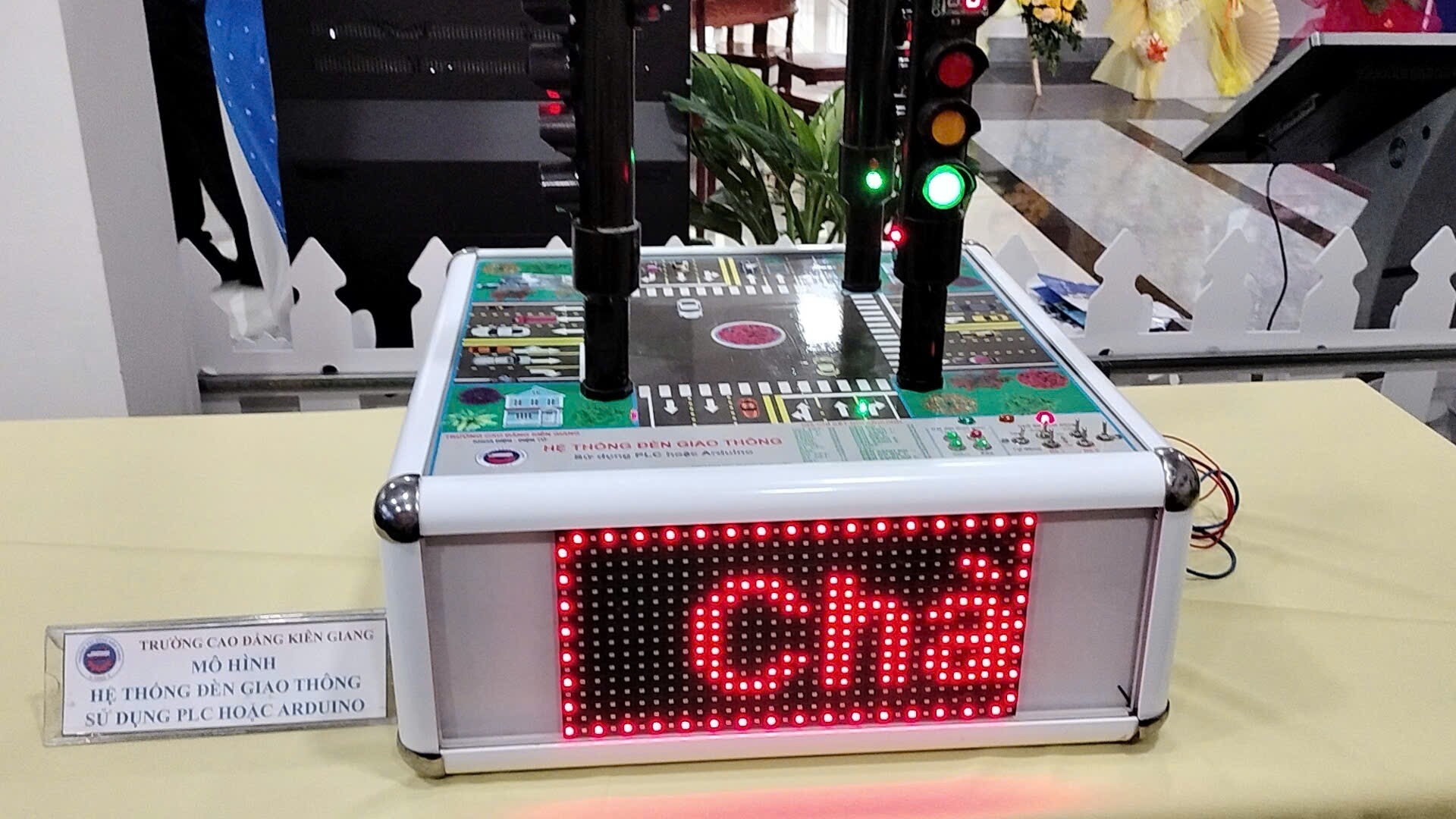
"Figure 1. Traffic Light System Model using PLC or ARDUINO by Nguyễn Văn Sáng, Faculty of Electricity - Electronics, Kien Giang College."

"Figure 2. Arduino Programming Application for Monitoring and Controlling the Conversion Model of Gasoline Motorcycles to Hybrid Vehicles by Trần Đức Tám, Faculty of Mechanical Engineering, Kien Giang College."
Innovation is also clearly reflected in the selection of research topics. Many projects now focus on highly applicable fields, integrating emerging technologies with the college’s specialized training. Key examples include the development of Industrial IoT communication control models for teaching; the conversion of gasoline motorcycles into hybrid models; the design and construction of automated control systems for practical training; and the application of Artificial Intelligence (AI) in developing lectures and learning materials. These projects demonstrate a clear shift from theoretical research to practice-based research tailored to real-world demands.
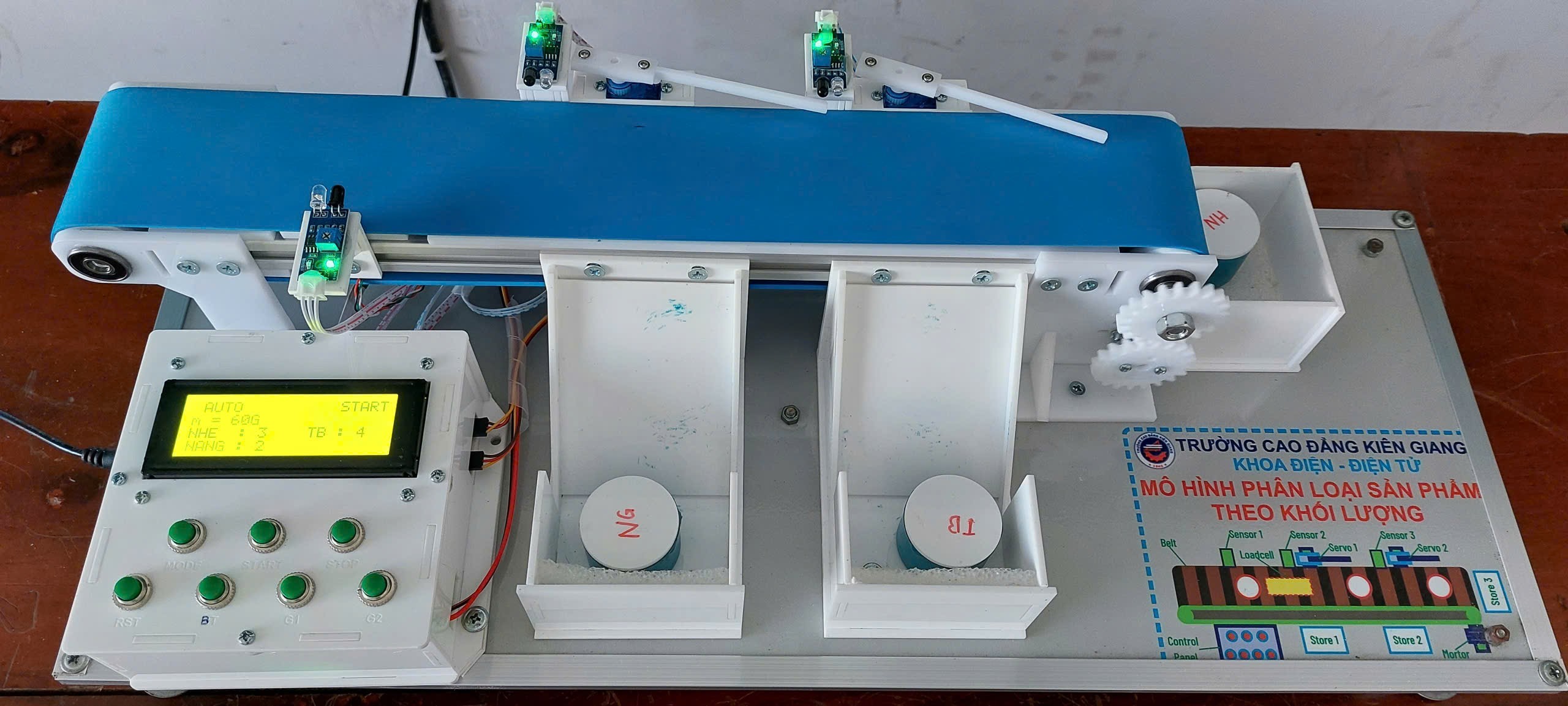
"Figure 3. Product Sorting System by Weight Model by Nguyễn Văn Sáng, Faculty of Electricity - Electronics, Kien Giang College."
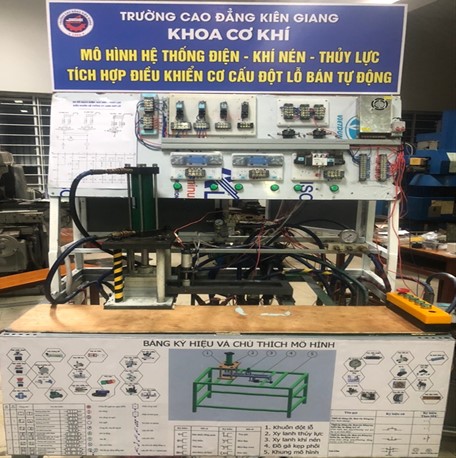
"Figure 4. IOT Technology Application for Controlling Integrated Electro-Pneumatic and Hydraulic Models with Semi-Automatic Punching Mechanism Control by Lê Quang Tâm, Faculty of Mechanical Engineering, Kien Giang College."
Innovation is also evident in the methodology of research implementation. Faculty members have become more proactive in conceptualizing, designing, and executing research models. The process has evolved beyond mere report writing to encompass the design, construction, testing, and refinement of actual products. This seamless integration of theory and practice not only enhances the quality of research projects but also provides students with direct access to practical models throughout their studies.
Another highlight is the increased integration of research findings directly into teaching and practical training. Numerous research products are now utilized as instructional tools, illustrative models, or technical support within the college. Consequently, scientific research is no longer detached from training activities; instead, it has become an organic component that enhances the overall effectiveness of teaching and learning.
Driven by innovations in mindset, content, and methodology, scientific research at Kien Giang College has recorded numerous positive transformations. The quality of research projects has significantly improved, with a high rate of on-time completion and all projects meeting evaluation standards—many of which demonstrate strong practical applications. More importantly, the research spirit and awareness of our staff have undergone a remarkable shift, becoming more proactive, positive, and creative.
These transformations are evident not only in the specific outcomes of each project but also in the creation of an increasingly dynamic research environment within the college. This vibrant atmosphere motivates faculty members to continue exploring, innovating, and enhancing their professional expertise. Simultaneously, students benefit directly from these research products by gaining access to practical models, advanced equipment, and real-world learning methodologies.
It can be affirmed that innovation in scientific research at Kien Giang College is not merely a formal change but a substantive transformation, starting from practical shifts in the mindset and actions of our staff. These initial achievements serve as a vital foundation for the college to further advance, aligning scientific research with digital transformation, technological application, and the continuous enhancement of training quality in the coming years.
Based on these positive transformations, it is evident that the spirit of innovation has become a vital driving force behind the development of Kien Giang College. This serves not only as a foundation for enhancing the quality of scientific research but also contributes to building a dynamic, substantive, and sustainable educational environment—one where every staff member can unleash their creative potential and make meaningful contributions to the collective growth of the college.
QUALITY ASSURANCE DEPARTMENT